• Home
  • Suggest A DIY
  • DIY Newsletter

Quilting

Patterns, patchworks and projects

  • About CraftGossip
  • Our Network
    • Bath & Body Crafts
    • Candle Making Ideas
    • Crochet Ideas
    • Cross Stitch
    • Edible Crafts
    • Felting Patterns
    • Glass Art
    • Home & Garden Ideas
    • Indie Crafts
    • Jewelry Making
    • Kids Crafts
    • Knitting Patterns
    • Lesson Plans
    • Needlework
    • Party Ideas
    • Polymer Clay
    • Quilting Ideas
    • Recycled Crafts
    • Scrapbooking
    • Sewing Patterns
    • Card Making
    • DIY Weddings
    • Not Craft Ideas
  • Giveaways
  • Roundups
  • Store
  • Search

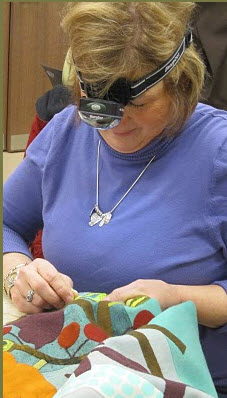
Tools: What’s on this student’s head?

February 25, 2011 by Scarlett Burroughs

Okay, I’m cruising through all the photos of student’s work at a recent Sue Spargo workshop in Kokomo, Indiana and I paused. What is that on this student’s head? If you are like me or know someone over 40 you know we need more light to see as we age. Please someone tell me what this is and where you purchased it. I will not rest until I have one atop my head, just like Pat.

Editor’s note Feb 26, 2011: I have enjoyed reading each of your comments. Thanks for sharing with me all the ways you can use this head light and where to get one.  –Scarlett

«
»

Comments

  1. Katherine says

    February 25, 2011 at 9:49 am

    It looks like a basic headlamp. There are tons of different styles ranging in price at most hardware stores. 🙂

  2. melissa says

    February 25, 2011 at 9:56 am

    My dad has one for working on the car and he LOVES it. We always teased him about using it, but now that I see someone quilting with it I may have to eat my words. Not sure why it didn’t occur to me to use one for sewing. Here’s a link to one on Amazon.

    http://www.amazon.com/3-LED-Personal-Headlamp-Case/dp/B002CNGP84

  3. susie says

    February 25, 2011 at 10:07 am

    It’s called a head lamp. You can buy them at most outdoor stores. We use them at our summer cottage because we don’t have any electric power. Perfect for reading at night and finding our way home in the dark. Great idea for sewing , quilting and art.

  4. scarlettburroughs says

    February 25, 2011 at 10:08 am

    Thank you Katherine and Melissa for identifying this nifty tool. I’m going out there to Amazon right now. Y’all are the best!

    Scarlett

  5. Jenn Shock says

    February 25, 2011 at 10:16 am

    You can get them at wal-mart or target in the camping section too. My hubby was an Eagle Scout and had one for when they went caving.

  6. Sue says

    February 25, 2011 at 10:19 am

    My husband and I each used one last night at the end of our hike when it got dark:) Love mine! So nice that it’s hands free, especially since we hike with trekking poles.

  7. Yvonne says

    February 25, 2011 at 11:53 am

    Home Depot has many to choose from, I bought several for Christmas gifts this year.

  8. Susan Mercer says

    February 25, 2011 at 12:00 pm

    My husband and kids have them for camping. I believe we bought them at the local Travel Country store. Should be able to find them at a sporting goods store.

  9. Mags Bonham says

    February 25, 2011 at 12:36 pm

    I have a magnifying head thingy that also has a light on it that can move to shine wherever you need it. I got mine at Harbor Freight really cheap.

  10. Tammi says

    February 25, 2011 at 1:02 pm

    LED headlamp – most handymen, mechanics have one. Available at places like Home Depot, Lowes…different styles
    My husband’s is made by Coast, it has an adjustable light.

  11. Sam says

    February 25, 2011 at 1:49 pm

    That thing on her head, a basic Energiser head lamp. They can be found all over the place, usually at Target, in the flashligh section. The head lamp runs under $20, closer to $10, if I remeber corectly. They run on 3 triple A batteries, and go a long time between changes. my family has replaced all the traditional flashlights with these, and loves them.

  12. Kelly says

    February 25, 2011 at 6:12 pm

    LL Bean, REI, Lands End all carry them. We use them camping, walking the dog at night and they are a more directed light, so I can read in bed with one and the light doesn’t bother my husband. Pay attention to the reviews, they are all a little different. Mine is lighter than my husband’s and my son’s is bomb proof. These are great stocking stuffers and my girls use their’s all the time. My oldest uses it at night when she is on the campus. We have a joke about where we all keep ours.Watch out, mine can sometimes walk away and find itself in my husband’s toolbox.

  13. PamB says

    February 25, 2011 at 8:45 pm

    Like many of my fellow mail carriers I used one when delivering or collecting mail after dark. We must use both our hands to hold, “finger” and deliver mail, so “using our heads” to light our way is the logical solution. I have to admit I never thought about using a headlamp for close work when quilting or other handwork, but since I often do craft projects or read whenever we’re on driving vacations, I will certainly keep this handy tool in mind!!!

  14. Eve says

    February 25, 2011 at 11:01 pm

    I have been using a light like this for years. It is a simple head lamp that some use for camping or other outdoor activities. I spend lots of time waiting on my kids in a dark car so I use the light to keep knitting after the sun goes down and I’m in car line waiting to pick up the kiddos! I get mine at walmart.

  15. Karen says

    February 26, 2011 at 1:23 am

    Looks like the Everready led headlamp I bought my husband in Walmart for about $10. It allows you to point it down and has several light settings so you can move the light where you need it and use a little or a lot of light.

  16. Melissa says

    February 26, 2011 at 8:34 am

    It looks like a hikers headlamp. You can buy them in all kinds of varieties at REI or Cabella’s. Really any outdoor shop will carry them 🙂

  17. Brenda says

    February 26, 2011 at 11:11 am

    You can also find at Walmart in the flashlight section….and some models even have a magnifiy capability

  18. Dennis says

    February 26, 2011 at 2:58 pm

    You can get them at WalMart, Kmart any department store will carry them. You need to go try them on so you can get one that is not to heavy.

  19. Rebecca J says

    February 26, 2011 at 4:41 pm

    My husband bought one for me so that I could walk at night. He got ours from LL Bean. It is one of the most useful tools we have. It’s used for many, many things and we both use it. I see it’s already been correctly identified.

  20. Peta says

    February 26, 2011 at 5:01 pm

    I now have two, I got them at an Electrical supplies shop. I bought the expensive one for me and it is too bright so I gave it my husband and I use the $10.00 version. It is just right and has is a led daylight type.

Have you read?

Fabric Yardage Conversion Chart for Quilters and Sewers

If you’ve ever stood at the fabric counter doing mental maths while trying not to look confused, you are definitely not alone. Fabric yardage conversions sound simple until you’re halfway through a project, your pattern says you need 5/8 yard, and your brain suddenly forgets how many inches are in anything.

It happens to the best of us.

A good fabric yardage conversion chart is one of those sewing room basics that saves time, reduces mistakes, and makes fabric shopping feel a whole lot less chaotic. Whether you are quilting, sewing from scratch, or trying to work out if that leftover cut is enough for binding, backing, or blocks, having the most common yardage measurements at a glance is incredibly helpful. Quick yardage-reference charts are popular because they solve exactly that problem for sewists and quilters.

Why a Fabric Yardage Conversion Chart Is So Useful

Patterns often list fabric in fractions of a yard, but many of us think more easily in inches once we start cutting. That little gap between “what the pattern says” and “what I actually need to cut” is where mistakes creep in.

A yardage conversion chart helps you quickly convert common cuts of fabric into inches, so you can:

  • figure out how much fabric to buy 
  • estimate whether leftovers are enough for a project 
  • plan quilt borders, binding, and backing 
  • compare cuts when shopping sales or clearance tables 
  • avoid overbuying fabric just because the numbers feel annoying 

And let’s be honest, most of us already have enough mystery fabric in the stash without accidentally adding “bought too much because fractions are rude.”

Standard Fabric Yardage Conversions

Here are the most common fabric yardage conversions every quilter and sewer should know:

  • 1/8 yard = 4 1/2 inches 
  • 1/4 yard = 9 inches 
  • 1/3 yard = 12 inches 
  • 3/8 yard = 13 1/2 inches 
  • 1/2 yard = 18 inches 
  • 5/8 yard = 22 1/2 inches 
  • 2/3 yard = 24 inches 
  • 3/4 yard = 27 inches 
  • 7/8 yard = 31 1/2 inches 
  • 1 yard = 36 inches 

These are based on the standard fact that 1 yard equals 36 inches, which is the basis for quilting yardage calculators and printable converter charts.

Fabric Yardage Conversion Chart

Here’s the quick-reference version you can include directly in the article:

YardageInches
1/8 yard4.5 inches
1/4 yard9 inches
1/3 yard12 inches
3/8 yard13.5 inches
1/2 yard18 inches
5/8 yard22.5 inches
2/3 yard24 inches
3/4 yard27 inches
7/8 yard31.5 inches
1 yard36 inches

That’s the sort of chart worth printing and taping near the cutting mat. Right beside the rotary cutter you can never find when you just had it in your hand two seconds ago.

How Quilters Use Yardage Conversion Charts

For quilters, this kind of chart is especially handy because so many projects are built from repeated cuts.

You might need:

  • 1/4  yard for a small contrast fabric 
  • 3/8  yard for sashing 
  • 5/8  yard for binding 
  • 2  1/3 yards for backing 
  • 3/4 yard for borders 

Having a chart nearby means you can quickly convert those amounts into inches if you’re cutting from folded fabric or checking leftover pieces.

It is also helpful when combining stash fabrics. You might think you only have “a small leftover,” but once you measure it and realise it is actually 18 inches, that half yard suddenly looks a lot more useful.

The Difference Between Yardage and Fabric Width

This is the part that catches a lot of beginners out.

When we talk about yardage, we are talking about the length of fabric you buy. The width of the fabric is separate and depends on the type of fabric.

Most quilting cotton is usually sold in widths around 42 to 44 inches, while other fabrics may be wider or narrower. That means if you buy 1/2 yard of quilting cotton, you are usually getting a piece that measures about 18 inches long by 42–44 inches wide. Fabric calculators and quilt references often assume standard quilting cotton widths when discussing cutting and planning.

That’s why yardage charts are useful, but they are only part of the story. You still need to know the fabric width if you are calculating how many strips, squares, or blocks you can cut.

Common Sewing and Quilting Examples

Sometimes the easiest way to understand yardage is to picture actual cuts.

What does 1/4  yard of fabric look like?

A quarter yard is 9 inches long. If it is quilting cotton, it will usually be about 9 x 44 inches.

That can be enough for small patchwork pieces, applique, linings, or accent fabrics.

What does 1/2 yard of fabric look like?

A half yard is 18 inches long. In quilting cotton, that is usually around 18 x 44 inches.

This is a very common amount for small projects, bag linings, binding, and feature fabrics.

What does 5/8 yard of fabric look like?

This one trips people up because it is less common in everyday life but very common in sewing patterns.
5/8 yard = 22 1/2 inches.

That extra bit beyond a half yard is often included because it gives enough room for slightly larger pieces or for layouts that need a little cutting wiggle room.

What does 3/4 yard of fabric look like?

Three-quarters of a yard is 27 inches.

This is a useful cut for borders, simple bag pieces, garment sections, and medium-sized sewing projects.

A Simple Trick for Converting Yardage

If you ever forget a conversion and do not have your chart nearby, here’s the easy rule:

Multiply the yard amount by 36

For example:

  • 1/2 yard × 36 = 18 inches 
  • 1/4 yard × 36 = 9 inches 
  • 5/8 yard × 36 = 22.5 inches 
  • 3/4 yard × 36 = 27 inches 

It is simple maths, but not always the kind of maths your brain wants to do when you are knee-deep in fabric choices and already trying to remember whether you needed background fabric, border fabric, or both.

Why This Matters When Buying Fabric

A conversion chart is not just handy for cutting. It can also save money.

When you understand yardage properly, you are less likely to:

  • buy more fabric than you need 
  • come home short because you guessed 
  • avoid useful remnants because the measurement feels unclear 
  • skip stash fabrics that are actually large enough 

It also makes it much easier to substitute fabrics from your stash instead of buying new cuts every time. And that is always satisfying, especially when the stash starts acting like a second craft room.

Best Way to Keep a Yardage Chart Handy

The handiest place for a fabric yardage conversion chart is near your cutting table or pinned to your sewing room wall. Many sewists also save these charts to their phone for fabric shopping trips, which is exactly how printable quilting charts are often used.

You could also:

  • laminate one for the sewing room 
  • tuck one into your quilting planner 
  • keep one in a project binder 
  • print a small version for your wallet or tote 

Because yes, fabric shopping absolutely counts as preparation.

Yardage Conversion Chart vs Fat Quarter Chart

A yardage conversion chart tells you how many inches are in a cut of yardage.

A fat quarter chart is different. A fat quarter is usually cut as approximately 18 x 22 inches, rather than a long narrow quarter yard. That difference matters when planning quilt blocks and strip cuts. BeccaBug also separates these into different printable charts, which shows they serve different uses.

So if you are quilting, it helps to keep both charts handy:

  • yardage conversion chart for buying and measuring fabric 
  • fat quarter chart for project planning and cutting layouts 

A Handy Sewing Room Basic

There are some tools in a sewing room that feel optional until the day you really need them. A fabric yardage conversion chart is one of those.

It is simple, practical, and genuinely useful whether you are a beginner learning the basics or a more experienced quilter who just wants to stop second-guessing fractions at the fabric shop.

And honestly, anything that helps us buy fabric with more confidence deserves a permanent place in the craft room.

Categories

Christmas quilts Craft Competitions Craft News and Events Free Quilt Patterns Modern More Quilting Patterns & Projects Quilting Art Quilts Quilting Blocks Quilting Books Quilting Contest Quilting Events Quilting Fabric Quilting Gift Ideas Quilting How To & Tutorials Quilting Inspiration Quilting Products Quilting Technique Scrap Fabric Tutorials and Patterns

RSS feed: More Articles More Articles

  • 10 Craft Gifts for Tweens Who Have Outgrown Kids’ Kits
  • Spooky Season Sweater Embroidery Design – Etsy Review
  • 5 FREE Bats and Moons in Windows SVG Die Cut Files for Halloween
  • The Forest Valley Shawl – Crochet Pattern
  • DIY Pinecone Bouquet: Easy Painted Pinecone Flowers for Fall Decor
  • Etsy Feature – Raven Pottery Slab-Building Template
  • DIY Milk Jug Halloween Skulls – Recycled Porch Decor
  • Make One Christmas Gift for Everyone: How to Save Money With Bulk Craft Supplies
  • Crocheting Christmas Gifts? Make This Supply Checklist Before You Buy More Yarn
  • DIY Faux Candy Apples: Easy Glossy Fall Decorations

Copyright © 2026 · CraftGossip | Start Here | Contact Us | Link to Us | Your Editors | Privacy and affiliate policy