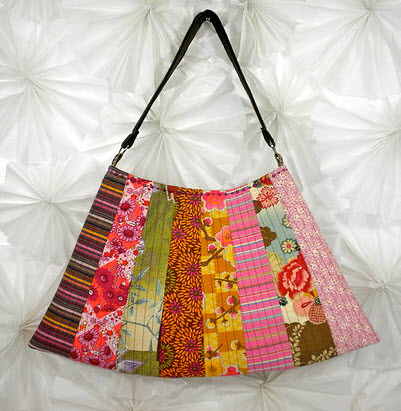
This quilted purse is simply charming. You can find the pattern at La Todera.
Image credit: La Todera
Patterns, patchworks and projects
There is something wonderfully irresistible about a quilt with texture.
Not just ordinary quilting texture, either. I mean padded flowers, raised geometric shapes, softly stuffed lettering and quilted motifs that seem to lift right off the fabric.
Trapunto quilting has been around for centuries, but it is finding a fresh audience among modern quilters who love minimalist wholecloth quilts, chunky hand stitching and tactile textile art. Instead of limiting the technique to traditional white heirloom quilts, today’s makers are using trapunto on colourful cushions, modern quilt blocks, wall hangings, bags and even machine-embroidered projects.
Let’s be honest, it is also an excellent excuse to rummage through the batting cupboard and declare that every leftover piece has suddenly become essential.
These trapunto quilting tutorials include beginner-friendly machine methods, traditional hand-stuffed techniques, shadow trapunto, free-motion quilting ideas and small projects you can finish without wrestling an entire bed quilt through the machine.
Trapunto is a quilting technique that adds extra padding beneath selected areas of a design. Those padded sections remain raised while the surrounding fabric is quilted more densely, creating noticeable depth and shadow.
Traditional trapunto was often stuffed by hand through small openings in the backing fabric. Many modern quilters use a cut-away machine method instead. Extra batting is stitched behind the chosen motif, trimmed close to the outline and then covered by the regular quilt sandwich.
Trapunto is different from a puff quilt. Puff quilts are made from individually stuffed pockets, while trapunto raises selected motifs within an otherwise flatter quilted surface.
The Complete Guide to Trapunto Quilting is a very practical starting place for anyone who has admired trapunto but assumed it required advanced heirloom-quilting skills.
The tutorial demonstrates the modern cut-away batting method and explains how to mark, stitch and trim the padded shapes. It also includes instructions for turning a finished trapunto panel into a contemporary cushion, plus a smaller quilted pouch project.
This is probably the best choice for a beginner who wants one guide covering materials, batting, stitching and project construction. The clean geometric cushion also proves that trapunto does not need to involve traditional feathers or elaborate floral motifs.
The Trapunto Silk Pillow combines trapunto with ruler work and closely spaced free-motion quilting.
Diamond shapes are padded with high-loft batting, while the background is densely stippled to make the raised areas stand out. The silk fabric gives the finished cushion a beautiful sheen, although quilting cotton would be a more forgiving choice for a first attempt.
This project is best suited to a confident quilter who wants to practise precise ruler work or free-motion quilting while making something decorative and useful.
The Modern Trapunto Cushion and Quilted Pouch offers two manageable ways to experiment with the technique.
The cushion uses repeating padded shapes to create a clean, almost sculptural surface. The pouch shows how selected details within a printed fabric can be raised rather than creating a separate marked motif.
I particularly like the pouch idea for using a favourite novelty print. You could pad moons, flowers, animals or leaves while leaving the smaller details flat.
The Machine Trapunto Tutorial walks through the process using a small quilt block rather than a large finished quilt.
The design is stitched through the quilt top and extra batting before the unnecessary batting is carefully cut away. Once the regular quilt sandwich is added, the surrounding areas can be densely quilted to emphasise the raised motif.
A single block is a sensible first project because it allows you to practise trimming close to the stitching without risking a large quilt top. Once finished, the block could become a cushion front, tote panel or mini wall quilt.
The Trapunto Snowflake Pillow Tutorial uses a bold snowflake motif surrounded by straight-line quilting.
The combination of machine quilting and hand quilting makes this project especially approachable if free-motion stitching around a detailed shape feels a little intimidating. The snowflake is large enough to show the padded effect clearly, while the straight background lines keep the overall design crisp.
Although it was created as a snowflake pillow, the same method could be adapted to a leaf, star, flower, monogram or simple Christmas tree.
The free Home Trapunto Pillow Pattern uses raised lettering and contrasting topstitching thread to create a modern decorative cushion.
Padded words work particularly well in trapunto because broad letters create clearly defined raised sections. This would make a thoughtful housewarming gift, especially if you replaced the word with a surname, place name or short personal message.
Choose thick block lettering rather than a delicate script. Wider shapes are much easier to pad, stitch and trim neatly.
The Valentine’s Day Quilted Heart is a lovely small project for practising trapunto and free-motion quilting together.
The central heart is padded so that it rises above the closely quilted background. While it was designed for Valentine’s Day, the heart could also be used for a wedding cushion, memory quilt, baby quilt or handmade anniversary gift.
Small projects like this are ideal for testing different batting combinations before committing to a full quilt. A high-loft polyester or wool batting generally creates a more pronounced raised effect.
The Dandelion Shadows Trapunto Tutorial explores shadow trapunto using felt behind a light-coloured top fabric.
Rather than hiding the extra layer completely, this technique allows the colour beneath the surface to show softly through the top. The effect falls somewhere between traditional trapunto, reverse appliqué and textile painting.
This project is a great choice for quilters who enjoy playing with colour but do not want to piece a complicated quilt top. Leaves, seed heads, feathers and simple botanical silhouettes all work beautifully with shadow trapunto.
The Machine Trapunto Quilting Tutorial focuses on using extra batting to add dimension to selected areas of a quilt.
The instructions clearly show how closely trimmed batting creates the raised shapes before the complete quilt sandwich is assembled. It is especially useful for understanding why dense background quilting is so important.
If the space around a padded motif remains loose and puffy, the trapunto section can disappear into the rest of the quilt. Compressing the surrounding batting creates the contrast that makes the design pop.
The Machine Trapunto Guide demonstrates how the technique can be adapted for longarm quilting.
The method still relies on attaching extra batting behind the chosen design and trimming it before completing the final quilting. The larger quilting area, however, allows bold medallions, feathers and oversized motifs to be worked more comfortably.
This is best suited to quilters who already use a longarm or midarm machine. Even so, the explanation of quilting density and design placement is useful for domestic-machine quilters too.
The Beginner’s Guide to Hand Trapunto approaches the technique from a more traditional hand-stitched direction.
Instead of using the modern cut-away batting method, enclosed areas are stitched and then filled with lengths of wool from behind. This creates a softer, hand-worked appearance that suits slow stitching, textile journals and embroidered wall art.
It is a particularly appealing option for makers who enjoy hand quilting but do not necessarily want to machine quilt an entire background.
The Trapunto Quilt Block Tutorial shows how to create a raised quilt block in an embroidery hoop.
Multiple layers of batting are tacked into place and trimmed before the base fabric and embroidery details are added. The resulting butterfly design has the familiar padded appearance of trapunto but is produced largely through programmed machine steps.
This is a good option for machine embroiderers who want to bring more texture into quilt blocks, bags or decorative panels. The finished block can stand alone or be combined with matching embroidered blocks in a larger quilt.
The Trapunto Tumbling Blocks Tutorial combines ruler quilting, free-motion stitching and dimensional geometric shapes.
The tumbling-block design is especially effective because the raised areas strengthen the illusion of depth. It is a clever way to make a simple strip, border or feature panel appear more architectural.
This one is better suited to quilters who are already comfortable guiding fabric or using machine-quilting rulers, but it offers plenty of inspiration for contemporary quilts.
The batting you choose will have a noticeable effect on the finished texture.
High-loft polyester batting generally produces the strongest puff because it springs back after being compressed. Wool batting also has excellent loft and gives beautifully defined quilting.
Cotton batting creates a softer, more subtle result. Many machine-trapunto quilters place polyester or wool behind the raised motif and then use a thinner cotton or cotton-blend batting across the complete quilt.
Always check the washing instructions, shrinkage and recommended quilting distance before combining two battings in the same project.
Solid and near-solid fabrics tend to show trapunto most clearly because the shadows are not lost among busy prints.
Good options include quilting cotton, cotton sateen, lightweight linen blends, shot cotton and pale wholecloth fabric. Dark fabrics can look dramatic too, especially when stitched with a slightly contrasting thread.
A subtle print can still work, particularly when individual elements in the print are padded. Large flowers, moons, animals and geometric shapes are much easier to highlight than tiny scattered details.
A full bed quilt may be tempting, but a smaller project will let you understand how the batting behaves without creating another long-term resident for the unfinished-project cupboard.
Try the technique on a cushion front, tote-bag panel, quilted pouch, table runner, journal cover, sewing-machine cover, mini wall quilt or framed block.
Start with one broad shape and avoid narrow points or fiddly curves. A large leaf, heart, flower, arch or circle will be much easier to stitch and trim than an elaborate feathered design.
Trapunto may look complicated, but the modern machine method is surprisingly achievable. Once you see that first padded motif rise above the quilted background, you may find yourself mentally adding extra batting to every quilt in the craft room.
Thanks for the shout out, Scarlet!! You guys rock!!