• Home
  • Suggest A DIY
  • DIY Newsletter

Quilting

Patterns, patchworks and projects

  • About CraftGossip
  • Our Network
    • Bath & Body Crafts
    • Candle Making Ideas
    • Crochet Ideas
    • Cross Stitch
    • Edible Crafts
    • Felting Patterns
    • Glass Art
    • Home & Garden Ideas
    • Indie Crafts
    • Jewelry Making
    • Kids Crafts
    • Knitting Patterns
    • Lesson Plans
    • Needlework
    • Party Ideas
    • Polymer Clay
    • Quilting Ideas
    • Recycled Crafts
    • Scrapbooking
    • Sewing Patterns
    • Card Making
    • DIY Weddings
    • Not Craft Ideas
  • Giveaways
  • Roundups
  • Store
  • Search

Focus your quilt giving | Win Making A World of Difference

November 22, 2015 by Scarlett Burroughs

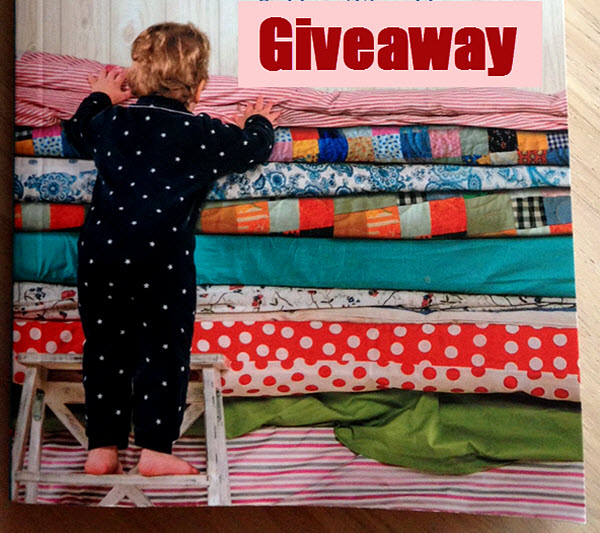
Book Giveaway Making a World of DifferenceEver wonder where to begin to do good stitches? You pick up a copy of Ruth McHaney Danner’s book, Making a World of Difference One Quilt at a Time. There, she shares fifty-four stories of quilters who engage in community quilt giving activities.

As promised here, I’m giving away a copy of this inspirational title to a lucky Craft Gossip reader. Here’s how to enter: Leave a comment on this post, and name one charity in your community where a quilt could comfort someone or something.

Contest ends Nov 28, 2015 at 10 PM CST.

Sorry, but this contest is open to U.S. entries only.

Good luck everyone!

{Image credit: uploaded by Editor}
«
»

Comments

  1. Alison says

    November 22, 2015 at 12:05 pm

    I like the idea of giving quilts to people in hospice. I have cancer and was given a quilt recently for my recovery from major surgery. It is such a comfort. I can only imagine what it would do for someone facing the end of their life (as well as the comfort it would give their loved ones, as mine has).

  2. Brenda Wells says

    November 22, 2015 at 1:44 pm

    I would love to win this book. I would give quilts to Seattle Children’s hospital. I have taken my own daughter there 4-5 times throughout her childhood (thankfully for non-life-threatening issues) and I can only imagine the comfort a quilt would bring to the many children there. Seattle Children’s is the premier medical center for trauma and advanced medical care for children serving a 7 state region.

  3. Cindy says

    November 22, 2015 at 4:13 pm

    Giving quilts to CARTI in Little Rock to bring comfort to cancer patients during chemo.

  4. Sarah J. says

    November 22, 2015 at 9:27 pm

    I worked in a pediatric ER and was fortunate enough to have donated quilts to give to children/ teens. Many came unprepared to spend the night at the hospital and it was always appreciated when I could provide a quilt to help normalize the environment and provide comfort. My goal is to build my quilting skills and donate to other pediatric hospitals. Homeless shelters are also always in need and would be a great place to donate as well!

  5. Steph Lindsay says

    November 22, 2015 at 10:14 pm

    I am making a quilt for Next Move Sacramento. They have a shelter for homeless families, and also help provide housewares and bedding to those re-establishing housekeeping. Their clients can really use the quilts!

  6. Chris says

    November 23, 2015 at 2:43 am

    The women’s shelter gets all our quilts from the quild but I make a few extra for our Hospice.

  7. Steph Anie says

    November 23, 2015 at 9:56 am

    Well we do a lot of benefits for people with medical issues. I usually donate a quilt for auction at these events.

  8. Mary Helene says

    November 23, 2015 at 11:13 am

    My quilt club gives them to our local hospital for the oncology and pediatric floors.

  9. Brenda Ackerman says

    November 23, 2015 at 12:04 pm

    I belong to a Project Linus Guild that serves our local community with mainly quilts but a few of the members crochet hats, socks and mittens also. This month our group of 20 members created 70 quilts to be shared with our community! I would love to win this book and share it with our members! Thank You for the opportunity to win this great prize and have a wonderful creative day!

  10. Cyndy Knapp says

    November 23, 2015 at 2:49 pm

    This looks like a great book! I enjoy making baby quilts for Birthright here in my hometown because I believe every baby deserves a quilt. When we take the quilts from our quilt guild members, the ladies at Birthright get so excited!

  11. Linda G says

    November 23, 2015 at 9:14 pm

    I would love to win this book. My husband and I are starting to put together packs for foster kids – one of the components is a quilt!

  12. Jean Gerretsen says

    November 23, 2015 at 10:20 pm

    There is a Frederic Ozanam Transitional Shelter in my time that helps the homeless become less dependent on public assistance and become more self-sufficient and quilts would definitely be useful in our midwest winters.

  13. Renee G says

    November 23, 2015 at 10:27 pm

    I’d love to see this go to our local Vanessa Behan Crisis nursery. It serves children in need.

  14. cwknitnut says

    November 24, 2015 at 9:26 am

    My niece works for a private adoption agency. Every child who is adopted out gets their own quilt. My sister has been donating to them for a few years now and since I have just begun to quilt, my first quilt went there also!

  15. Sharon says

    November 24, 2015 at 10:54 pm

    The Challis Community Church/United Church of Christ could really use help creating four new quilts for the four households/people we’ve adopted for Christmas. The first household is that of a single man in his nineties who is doing great and just needs to keep warm and comfy during the winter. The second quilt will go to an older woman with cancer who needs a very washable large lap robe to help her keep warm. The third woman lives by herself in an old drafty mobile home. She needs a single bed quilt to keep her warm when she sleeps in her recliner. The last quilt is needed for a teenager and her boyfriend who are about to become parents. The young woman was raised by her grandmother, now gone, because the girl’s mother was using drugs. Unfortunately, the drug problem has followed the girl but she is trying to clean up so she can keep her child. As she says, with her grandmother gone and her mother still using, who will adopt her baby if she doesn’t get straight. A baby quilt is greatly needed. We understand what you mean about helping one quilt at a time. Keep up the good work.

  16. mary blevins says

    January 26, 2016 at 6:16 pm

    i love to quilt ! i love to give quilts to people in rest homes . but if i win the give away i would like to start a drive to give small quilts to the police to give to children who are scared cause the police have been called to their house for what ever reason domestic abuse or parents that have gone down the wrong path . every child needs a special quilt to have to make them feel safe !

Have you read?

Resistance Quilts: When Patchwork Becomes Protest

Quilts have always carried more than warmth.

They preserve scraps from dresses worn thin, shirts belonging to people we love and fabrics that instantly return us to another season of life. But quilts can also carry anger, grief, memory, defiance and hope. When words feel too fleeting, a message stitched into fabric has a way of making people stop and look.

Resistance quilts, protest quilts and social justice quilts have become especially visible again, with modern quilters turning traditional patchwork, appliqué, embroidery and hand quilting into bold statements about the world around them.

At QuiltCon 2026, quilts addressing immigration, censorship, race, corruption and human rights attracted attention far beyond the usual quilting circles. Some contained large pieced slogans. Others communicated through symbols, colour choices, discarded clothing and quietly devastating personal stories.

There is something wonderfully subversive about using an object associated with comfort and domestic life to hold an uncomfortable message.

Perhaps that is why resistance quilting feels so powerful. A quilt asks us to come closer. We notice the stitches, the texture and the hours of work before we fully absorb what the maker is saying. It is protest presented through patience.

Below you will find inspiring resistance quilt projects, social justice quilting organisations, historic memorial quilts and practical resources for creating a quilt with a message of your own.

Resistance Was at the Heart of QuiltCon 2026

Resistance Was at the Heart of This Year’s QuiltCon

This QuiltCon 2026 feature is the ideal starting point for understanding why resistance quilts are receiving so much attention. It highlights powerful modern quilts addressing racial profiling, censorship, government policy, school shootings and the importance of protest itself.

What struck me most is the contrast between the softness of a quilt and the bluntness of the messages. These are not background decorations. They are artworks asking to be read, discussed and remembered.

Quilting Against ICE

Quilting Against ICE

This collaborative project brings quilters together across different countries to create textile work responding to detention, deportation, surveillance and immigration enforcement.

The project shows how a resistance quilt does not need to be made by one person from beginning to end. Individual panels can carry separate stories while becoming part of one larger, shared statement.

Patchwork of Resistance Project Guidelines

The project guidelines are particularly helpful for anyone interested in participating in collaborative resistance quilting. They explain how contributors can create panels that honour those affected by detention and state power.

Even when a particular call for entries has closed, guidelines like these are useful when organising your own community quilt, sewing-circle project or textile installation.

The We the People Quilt Project

We the People Quilt Project

The We the People Quilt Project asks participants to reflect on what they value, what they hope for and what kind of future they want to help build.

I love this approach because resistance does not always need to begin with rage. Sometimes it begins by clearly stating what we are protecting: dignity, safety, community, equality or hope.

This is a beautiful example of quilting being used to create a collective visual conversation.

Social Justice Sewing Academy Community Quilts

Social Justice Sewing Academy Community Quilt Project

The Social Justice Sewing Academy helps young people use textile art to examine issues affecting their communities. Workshop participants design quilt blocks exploring subjects such as racial profiling, environmental damage, inequality and the wage gap.

Volunteer embroiderers, embellishers, piecers and quilters then help transform those individual blocks into finished community quilts. It is a wonderful model for combining education, creativity and practical action.

Social Justice Sewing Academy Quilt Gallery

The quilt gallery is well worth spending some time exploring. Each piece demonstrates how lettering, portraits, traditional blocks, raw-edge appliqué and symbolic imagery can all be used to communicate social justice themes.

For anyone wondering what a resistance quilt can look like, the answer here is wonderfully broad. It can be graphic and confrontational, personal and tender, or layered with meanings that only emerge when you look closely.

The Social Justice Sewing Academy Remembrance Project

Social Justice Sewing Academy Remembrance Project

The Remembrance Project creates textile banners honouring people whose lives have been lost to violence. Volunteers help embroider and embellish portrait blocks before they are assembled into larger memorial works.

This is meaningful sewing in the truest sense. The stitching does not reduce a person to a statistic; it creates space for their name, face, life and story to be seen.

The Migrant Quilt Project

The Migrant Quilt Project

The Migrant Quilt Project is a collaborative effort by quiltmakers, artists and activists documenting migrants who died while crossing the Southern Arizona desert.

Many of the quilts incorporate clothing and materials collected from migrant resting sites. Each quilt records the names of people who died during a particular year, with unidentified individuals acknowledged as “unknown” or “desconocido.”

These are difficult quilts to view, but that is precisely why they matter. They turn numbers into names and discarded belongings into evidence of real human lives.

The Universal Declaration of Human Rights Quilt Project

The Universal Declaration of Human Rights Quilt Project

This global craftivism project brought together 131 artists representing 45 nationalities. Participants stitched interpretations of the 30 articles in the Universal Declaration of Human Rights, eventually creating four large collaborative quilts.

The finished works demonstrate how one broad subject can be divided between many makers without losing its overall message. This would be a brilliant format to borrow for a guild, school, library or community sewing project.

Choose one shared theme, assign each person a word or principle and let the finished quilt reveal the many ways people interpret it.

The AIDS Memorial Quilt

How to Make an AIDS Memorial Quilt Panel

The AIDS Memorial Quilt remains one of the most significant examples of community textile activism. Each panel commemorates a person who died from AIDS, using names, photographs, clothing, appliqué, paint, embroidery and personal mementos.

The official panel-making guide explains how families and friends can continue contributing to the quilt. It is also a moving lesson in how textile art can preserve stories that society once ignored or tried to hide.

You do not need highly advanced sewing skills to make something meaningful. A carefully chosen shirt, handwritten phrase or simple appliquéd name can carry enormous emotional weight.

The Fabric of Protest Resources

The Fabric of Protest

The People’s History Museum has assembled an excellent collection of free textile protest resources and videos. Projects include stitched banners, solidarity squares, campaign slogans, visible mending, human-rights pieces and textile responses to migration, disability and workplace inequality.

This is one of the most useful resources for readers who are inspired by resistance quilts but unsure how to begin.

You could complete one small activity as a standalone textile piece or combine several techniques into a larger protest quilt.

A Free Appliqué Alphabet for Protest Quilts

Free Appliqué Alphabet Pattern

Words are often the strongest feature of a resistance quilt, and this free appliqué alphabet gives you an approachable way to add names, slogans or short statements.

Use it on a full quilt, a wall hanging, a banner or even the back of a jacket. Keeping the letters large and the contrast strong will make the message easier to read from a distance.

How to Appliqué Words on Quilts

Tips for Appliquéing Words on Quilts

This practical guide covers some of the design decisions involved in adding lettering to quilts. It is especially useful when you want your words to feel like an intentional part of the composition rather than something added at the end.

Before cutting fabric, print or draw your complete message at full scale. Hang it on a wall and step several metres back. If the lettering disappears, simplify it or increase the contrast.

Patchwork Letters Tutorial

Patchwork Letters Tutorial

These appliquéd patchwork letters are perfect for makers who want to incorporate scraps into their wording. Using several fabrics within each letter can give a protest quilt a warmer, more handmade appearance.

It would also be a lovely way to incorporate donated scraps from different members of a community. Each fabric then becomes a small contribution to the finished message.

Beginner Raw-Edge Appliqué

Appliqué Quilting Tutorial for Beginners

Raw-edge appliqué is ideal for expressive quilting because it is quick, forgiving and full of texture. It suits silhouettes, symbols, portraits and oversized lettering without requiring hours of precise turned-edge work.

The slightly frayed edges can also add to the emotional quality of a resistance quilt. Not every politically meaningful piece needs to look polished and perfect. Sometimes urgency should remain visible in the stitching.

Crafting a Better World

Crafting a Better World Book Review

This CraftGossip review looks at Diana Weymar’s book about transforming concern, frustration and anxiety into creative action.

Although the book covers more than quilting, its message fits beautifully here: handmade work can start conversations, raise funds, preserve stories and help people feel less powerless.

It is an encouraging read for anyone who has ever wondered whether a small handmade act can genuinely make a difference.

Threads of Life: A History of Protest Through Stitching

How Needle and Thread Wove the Stories of Our World

This CraftGossip feature explores Threads of Life by Clare Hunter, a book tracing the role of needlework in protest, survival, identity and historical storytelling.

It offers important context for modern resistance quilting. Today’s political quilts may feel strikingly contemporary, but they belong to a much longer tradition of people using cloth and thread when other forms of expression were unavailable, unsafe or simply ignored.

How to Design Your Own Resistance Quilt

You do not need to begin with an enormous exhibition quilt. Start with one issue, one sentence or one story that matters to you.

Choose a format you can realistically finish. A small wall quilt, mini quilt, quilted banner or single community block can communicate just as clearly as a bed-sized piece.

Consider using:

  • Oversized pieced or appliquéd words
  • Clothing connected to a person or event
  • Traditional quilt blocks given a new meaning
  • Repeated names, dates or statistics
  • Portraits created with appliqué or thread painting
  • Fabrics in symbolic colours
  • Newspaper-style typography
  • Handwritten messages transferred to fabric
  • Visible mending to represent damage and repair
  • Empty or unfinished spaces to represent absence
  • Pockets containing letters or personal stories
  • QR codes linking to further information

Before sewing, ask yourself where the quilt will be viewed. A quilt designed for a gallery can contain tiny details and long passages of text. A quilt carried at a march needs large lettering, strong contrast and a manageable weight.

And do think about practical details. Add hanging sleeves, reinforced corners or fabric handles where needed. Photograph the finished quilt clearly and write down the story behind it while the details are fresh.

Why Resistance Quilts Matter

A social media post may disappear down a feed in minutes. A handmade quilt can be displayed, carried, archived and passed from one generation to another.

Every stitch records time willingly given to the message.

Resistance quilts are not only about opposing something. They can honour a life, defend a right, protect a memory, record a truth or show another person that they are not alone.

That is a remarkable amount of power to place inside a few layers of fabric.

And perhaps that is the real strength of these quilts: they take something familiar, soft and comforting and ask us not to look away.

Categories

Christmas quilts Craft Competitions Craft News and Events Free Quilt Patterns Modern More Quilting Patterns & Projects Quilting Art Quilts Quilting Blocks Quilting Books Quilting Contest Quilting Events Quilting Fabric Quilting Gift Ideas Quilting How To & Tutorials Quilting Inspiration Quilting Products Quilting Technique Scrap Fabric Tutorials and Patterns

RSS More Articles

  • 8 FREE Camping Journal and Project Life Cards to Download
  • Resistance Quilts: When Patchwork Becomes Protest
  • Clay Studio Series – YouTube Video Review 4 Pottery Hacks You Should Know!
  • Italian Cast On Knitting: How To Get That Perfect Stretchy Ribbed Edge
  • 20 Christmas Crochet Trends for 2026 With Free Patterns
  • 15 Dachshund Crochet Patterns for Sausage Dog Lovers
  • How To Make Natural Toothpaste: Homemade Toothpaste Recipes To Try
  • Learning about The Gambia for Kids
  • Sewing Pattern Saturday: Comfort Blanket 2-in-1 Sewing Pattern Review
  • Amigurumi Oh Poo Crochet Free Pattern

Copyright © 2026 · CraftGossip | Start Here | Contact Us | Link to Us | Your Editors | Privacy and affiliate policy