• Home
  • Suggest A DIY
  • DIY Newsletter

Quilting

Patterns, patchworks and projects

  • About CraftGossip
  • Our Network
    • Bath & Body Crafts
    • Candle Making Ideas
    • Crochet Ideas
    • Cross Stitch
    • Edible Crafts
    • Felting Patterns
    • Glass Art
    • Home & Garden Ideas
    • Indie Crafts
    • Jewelry Making
    • Kids Crafts
    • Knitting Patterns
    • Lesson Plans
    • Needlework
    • Party Ideas
    • Polymer Clay
    • Quilting Ideas
    • Recycled Crafts
    • Scrapbooking
    • Sewing Patterns
    • Card Making
    • DIY Weddings
    • Not Craft Ideas
  • Giveaways
  • Roundups
  • Store
  • Search

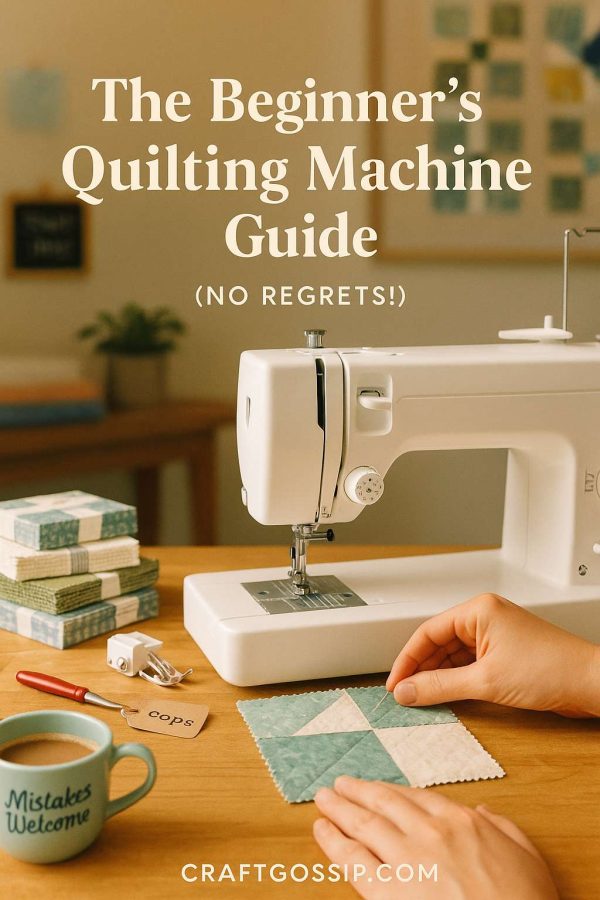
Best Sewing Machine for Quilting Beginners: Your No-Stress Buying Guide

May 8, 2025 by Shellie Wilson

beginner's-quilting-sewing-machine-guide

My very first quilting sewing machine was a $50 Black Friday bargain that I was so proud of — until the day it literally started smoking while I was trying to quilt a twin-size quilt top. (RIP, little guy. You tried.)

That experience taught me a hard lesson: not every sewing machine is built for quilting. And just because it says “quilting” on the box doesn’t mean it can handle thick seams, bulky batting, or hours of steady stitching.

After testing 23 sewing machines (and surviving two more near-meltdowns), I finally figured out how to choose the right beginner quilting machine — without overspending on advanced features you don’t need yet.

If you’re searching for the best beginner sewing machine for quilting, this guide will save you money, frustration, and possibly a puff of smoke from your workspace.

Here’s everything I wish someone had told me before I bought my first machine:

  • The 3 must-have features for beginner quilters (spoiler: an automatic needle threader is absolutely worth it)

  • 5 sewing machines under $500 that can actually handle thick quilt sandwiches

  • The truth about “quilting mode” — what it really means and when it actually matters

  • What to ignore when shopping for a quilting sewing machine

  • And how to know when it’s time to upgrade

If you’re ready to start quilting without frying your first machine, let’s break down what really matters — and what’s just marketing fluff.

What Makes a Sewing Machine “Good for Quilting”?

Non-Negotiables for Beginners

  • Throat Space: At least 7 inches (so your quilt doesn’t get stuck)
  • Walking Foot Included: Prevents fabric layers from shifting
  • Drop Feed Dogs: For free-motion quilting later

Nice-to-Have Perks

  • Speed Control: Because quilting a king-size in “rabbit mode” = regrets
  • Needle Up/Down: Crucial for precise pivots at corners
  • LED Lighting: Spotting seams under dim light = no more “mystery stitches”

2. The Best Machines Under $500 (Tested on Real Quilts)

1. Brother PQ1500SL ($479)

  • Why Beginners Love It:
    • 16-inch throat space (fits bulky quilts)
    • Straight stitch only (no confusing dials)
    • Industrial motor handles denim + quilt batting
  • Watch Out: No fancy stitches (but do you really need 200 decorative options?)

2. Janome 3160QDC ($449)

  • Best For: Quilters who want some embroidery flair
    • 60 stitches (great for quilted gifts)
    • One-handed needle threader (no squinting!)
    • Automatic thread cutter = fewer thread nests

3. Juki TL-2010Q ($499)

  • The “Grow With You” Pick
    • Professional-grade straight stitches
    • Knee lifter (hands-free presser foot lifting)
    • Heavy-duty but quiet

Pro Tip: Watch for Joann’s 50% off coupons—they work on these!

3. The “Don’t Waste Your Money” List

Overkill for Beginners

  • $1,000+ Machines: Unless you’re quilting daily, start smaller
  • Heavy Industrial Models: Your kitchen table will protest

Too Basic

  • Mini Machines: Can’t handle batting + fabric layers
  • Vintage Singers: Adorable but often need $200 in tune-ups

4. Your First Quilting Project: Start Here!

Pair your new machine with:

  • This free “Disappearing 9-Patch” pattern (uses only squares!)
  • Pre-cut fabric bundles (no scary rotary cutter yet)

My #1 Advice: Practice on placemats first—less pressure than a queen-size masterpiece.
 

«
»

Have you read?

Quilting Needles Explained: How to Choose the Right Needle for Piecing and Quilting

If your stitches are skipping, your thread keeps breaking, or your fabric looks slightly chewed… I’m going to gently suggest something.

It might not be your machine.

It might be your needle.

Needles are one of the most overlooked quilting notions. They’re small, inexpensive, and easy to ignore — until they start causing problems.

For hobby quilters, understanding just a few basics about needle type and size can completely change your sewing experience.

Let’s simplify it.

Why Quilting Needles Matter More Than You Think

Your needle:

  • Pierces fabric thousands of times

  • Carries thread through layers

  • Affects stitch quality

  • Influences tension

  • Impacts fabric damage

A dull or incorrect needle can cause:

  • Skipped stitches

  • Thread shredding

  • Uneven tension

  • Puckering

  • Tiny fabric holes

And because needles wear gradually, you often don’t realise performance has declined.

How Often Should You Change Your Needle?

Most hobby quilters don’t change needles often enough.

A good rule:
Change your needle every 1–2 quilt projects.

Or sooner if you notice:

  • A popping sound while stitching

  • Skipped stitches

  • Thread breakage

  • Visible fabric pulls

Needles dull faster than we think — especially when quilting through batting and multiple layers.

Needle Sizes Explained (Without the Confusion)

Needles have two numbers, like 80/12 or 90/14.

The first number (European sizing) refers to the shaft diameter.
The second number (American sizing) is the corresponding system.

The larger the number, the thicker the needle.

For quilting, most hobby quilters use:

80/12 – Good for piecing with 50wt thread
90/14 – Good for quilting through multiple layers
75/11 – Good for fine thread and lightweight fabric

If you’re unsure, 80/12 is a safe starting point for most cotton quilting projects.

Types of Needles for Quilting

This is where things sound more complicated than they are.

Let’s break it down clearly.

Universal Needles

Best for:

  • Basic piecing

  • General sewing

  • Beginners

Universal needles work well for most cotton quilting fabrics.

If you’re just starting out, they’re perfectly fine.

Quilting Needles

Quilting needles are slightly tapered and designed to:

  • Reduce fabric damage

  • Stitch through layers smoothly

  • Minimise skipped stitches

They’re excellent for detailed piecing and fine quilting work.

If you’re serious about accuracy, quilting-specific needles are worth trying.

Microtex (Sharp) Needles

Microtex needles are sharper and finer.

Best for:

  • Precision piecing

  • Tightly woven fabrics

  • Very accurate points

If you love crisp seams and sharp block points, these are a favourite among experienced hobby quilters.

Topstitch Needles

Topstitch needles have a larger eye.

Best for:

  • Heavier thread

  • Decorative quilting

  • Metallic thread

If your thread keeps shredding while machine quilting, switching to a topstitch needle can help.

Hand Quilting Needles (Betweens)

If you hand quilt or hand bind:

Betweens needles are:

  • Short

  • Strong

  • Designed for rocking stitches

For binding, slightly longer sharps are often more comfortable.

Needle choice in hand quilting is very personal — comfort matters.

Matching Needle to Thread

This is where many issues begin.

Fine thread + thick needle = loose stitches
Thick thread + fine needle = breakage

As a general guide:

50wt cotton thread ? 80/12 needle
Heavier quilting thread ? 90/14 needle
Fine detail quilting ? 75/11 needle

When thread and needle are compatible, stitching feels smoother immediately.

Signs You’re Using the Wrong Needle

  • Thread frays or snaps

  • Tension looks inconsistent

  • Fabric looks slightly pulled

  • Machine sounds louder than usual

  • Stitches don’t look clean

If something feels off, change the needle before adjusting tension settings.

It’s the simplest troubleshooting step.

Do Needle Brands Matter?

Yes — consistency matters.

High-quality quilting needles maintain sharpness longer and produce more reliable stitching.

When browsing quilting needles, look for:

  • Clear sizing labels

  • Quilting-specific packaging

  • Good reputation for durability

Specialty quilting retailers like Fat Quarter Shop carry a range of quilting, Microtex, and topstitch needles, making it easier to choose based on your project rather than guessing at a general sewing aisle.

The Bottom Line for Hobby Quilters

You don’t need every needle type.

Start with:

  • 80/12 quilting or universal needles

  • 90/14 for thicker projects

  • Replace regularly

If something feels wrong, change the needle first.

It’s the cheapest fix in quilting — and often the most effective.

This article is part of our Ultimate Guide to Quilting Notions for Hobby Quilters, where we simplify tools without overwhelming you.

Next in the series:
Marking Tools That Won’t Bleed or Ghost on Fabric


Categories

Christmas quilts Craft Competitions Craft News and Events Free Quilt Patterns Modern More Quilting Patterns & Projects Quilting Art Quilts Quilting Blocks Quilting Books Quilting Contest Quilting Events Quilting Fabric Quilting Gift Ideas Quilting How To & Tutorials Quilting Inspiration Quilting Products Quilting Technique Scrap Fabric Tutorials and Patterns

RSS More Articles

  • Everything You Need to Know about French Knots and Cross Stitch
  • Book Review Wednesday: Bead Jewelry Making For Beginners
  • Book Review Wednesday: Polymer Clay Jewelry
  • Knit a Pastel Plaid Sweater
  • 12 Scrapbookers You Should be Following on Instagram (where are all the blogs? pt. 2)
  • Spiderman Crochet Patterns For Little Superhero Fans
  • Shadow Knitting And Illusion Knitting Shawl Patterns With Hidden Designs
  • Quilting Needles Explained: How to Choose the Right Needle for Piecing and Quilting
  • Superhero Spiderman Star Afghan Pattern
  • Mattress Stitch Crochet: How To Join Crochet Pieces With A Nearly Invisible Seam

Copyright © 2026 · CraftGossip | Start Here | Contact Us | Link to Us | Your Editors | Privacy and affiliate policy