While we’re showcasing this skull-themed roundup in October, don’t be deceived—skulls are not limited to Halloween. Their versatility makes them a stylish and timeless choice for any occasion throughout the year.
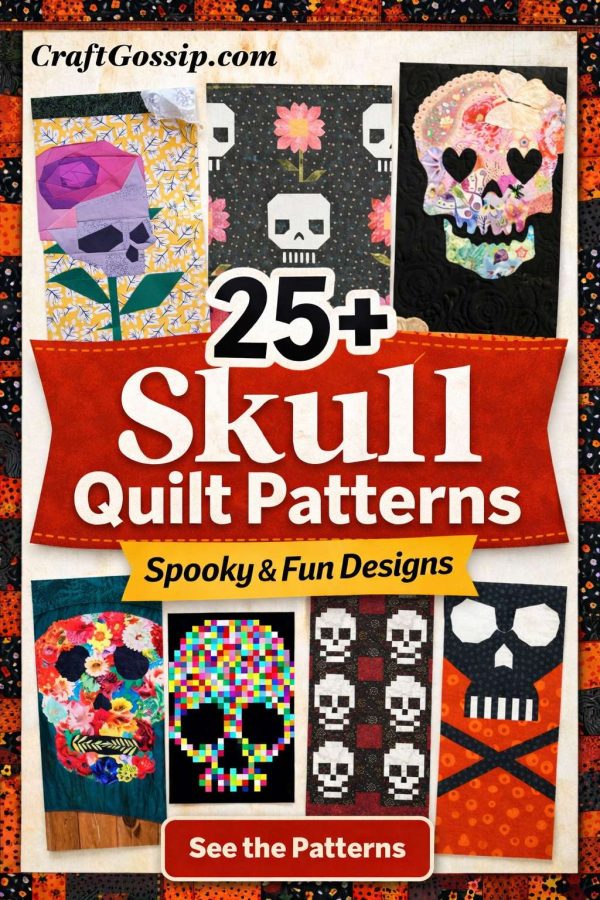
Welcome to a unique world where quilting meets edgy and unconventional design. In this curated collection, we present 25 skull-themed quilt patterns and tutorials that will captivate your imagination and add a touch of the extraordinary to your quilting projects. Whether you’re drawn to the macabre allure or appreciate the symbolism behind skulls, these patterns offer a diverse range of styles and techniques. Dive into this skull-inspired journey, where tradition meets rebellion in the realm of quilting artistry.
The perception of a skull quilt as a bad omen is subjective and varies among individuals and cultures. In many Western cultures, especially during Halloween, skulls are often associated with spooky or macabre themes. However, in other cultures, such as Mexican traditions like Día de los Muertos (Day of the Dead), skulls hold positive symbolism, representing the celebration of life and the remembrance of deceased loved ones.
If you are creating a skull quilt with positive intentions or as a form of artistic expression, there’s no inherent bad omen associated with it. Quilting, like any form of art, allows for personal creativity and interpretation
La Calavera Catrina Quilt Block
Free Pixelated Skull Quilt Pattern
Studio Dragonfly: Skull Quilt – A Halloween Quilt as a Christmas Gift
Maureen Cracknell Handmade: A Skull Quilt Pattern : :
Quilted Skull Pillow Free Sewing Pattern
The Skull Quilt. | Dancing With Frogs
FREE Tutorial -How to Create a Sugar Skull Flower-Collaged Art Quilt
Pushing Up Daisies – Skull & Flower Quilt – Lella Boutique
How to Make a Paper Pieced Skull Quilt Block –
Creatin’ in the Sticks: Collage Quilt a Sugar Skull – Tutorial
How to Free Motion Quilt Skulls (FREE PRACTICE SHEET)
Here is a list of all the opportunities you have to create a “Skull” quilt, so now you don’t have any excuses.
It’s essential to consider your own beliefs and the cultural context in which you are creating the quilt. If you’re unsure about the symbolism or potential reactions, you may want to share your creative process and intentions with others to avoid any misunderstandings.
Ultimately, the meaning behind your quilt is a personal choice, and as long as it aligns with your values and intentions, there’s no reason to consider it a bad omen.
Skulls and sugar skulls appear in a surprising range of celebrations, each with its own history and meaning. While some are deeply spiritual and rooted in remembrance, others use skull imagery in a more decorative, symbolic, or playful way.
One of the most well-known is Día de los Muertos, celebrated on November 1 and 2. This Mexican tradition honors loved ones who have passed away, and sugar skulls are one of its most recognizable symbols. Families build altars, leave offerings, and celebrate the memory of those they miss, with the belief that the spirits return to visit during this special time.
Halloween, celebrated on October 31, also makes heavy use of skull imagery. Its origins trace back to the ancient Celtic festival of Samhain, which marked the end of the harvest season and the beginning of a darker, more mysterious time of year. Over time, Halloween evolved into the costume-filled, decoration-heavy celebration we know today, where skulls are often used to create a spooky seasonal look.
In Christian traditions, All Saints’ Day on November 1 honors saints and martyrs, while All Souls’ Day on November 2 is dedicated to remembering and praying for the dead. In some places, these observances overlap with or influence Day of the Dead traditions, which is why skull motifs sometimes appear as symbols of memory, legacy, and the cycle of life.
Skull imagery also shows up in more lighthearted celebrations such as Pirates’ Day, including Talk Like a Pirate Day on September 19. While it is not a traditional holiday in the same sense, it draws heavily on pirate symbolism, especially the skull and crossbones made famous by pirate flags and stories.
Beyond holiday traditions, skulls are also embraced year-round in gothic, alternative, and artistic communities. From tattoo culture to alternative fashion and themed events, skulls are often used as symbols of individuality, rebellion, beauty, remembrance, or even transformation.
What makes skull imagery so interesting is how flexible it is across cultures. In one setting it can represent love and remembrance, in another it can be spooky and theatrical, and elsewhere it can be artistic or deeply personal. That mix of meaning is part of what keeps skull-inspired art, decor, and design so enduring.
Still looking for more Halloween quilting ideas? Check out our dedicated Pintrest board Halloween Quilt Patterns.