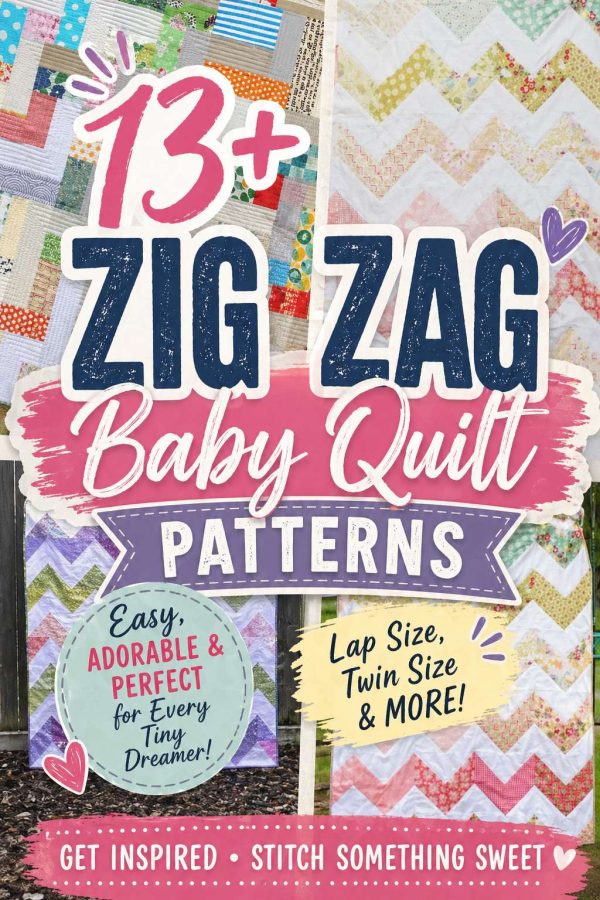
Zig zag baby quilts are one of those lovely quilting projects that always feel fresh, cheerful, and wonderfully giftable. Whether you call them zig zag quilts, chevron baby quilts, or simply “that cute wavy-looking quilt I saw on Pinterest,” this classic design is perfect for nurseries, handmade baby shower gifts, and quick quilting projects that still look impressive when finished.
There’s something so satisfying about the movement in a zig zag quilt pattern. The lines feel playful without being too busy, and depending on your fabric choices, you can make the finished quilt look modern, soft and pastel, bright and scrappy, or sweetly traditional. It’s also a brilliant way to use coordinating fat quarters, leftover baby fabrics, or those half-forgotten charm packs sitting in your stash pretending they aren’t multiplying when you’re not looking.
If you’re new to quilting, don’t let the angles scare you off. Many easy zig zag baby quilt patterns are made with half-square triangles, strip piecing, or simple layout tricks that create the chevron effect without needing complicated templates. The real secret is careful cutting, consistent seam allowance, and taking a little extra time when lining up your points. Trust me, a few slightly wonky points will not stop a baby quilt from being loved to bits.
Below, I’ve gathered a collection of beginner-friendly zig zag and chevron baby quilt patterns, including quick tutorials, modern designs, scrappy options, and soft nursery-style quilts. These are ideal if you’re looking for an easy baby quilt pattern, a handmade baby shower gift, or a weekend quilting project that gives you that satisfying “I made this!” feeling without taking over the entire sewing room.
oh.. katy made it!: Baby Name Chevron (or Zig-Zag) Quilt
Zig-Zag Baby {a finished quilt and tutorial!}
Achieving straight chevron points in your quilt involves careful planning and precise piecing. Here are some tips to help you get those sharp and straight chevron points
Start by accurately cutting your fabric pieces. Use a clear ruler and rotary cutter to ensure straight edges and precise measurements. Before sewing, consider marking the seam lines on your fabric pieces. This can be especially helpful if your quilt involves intricate patterns or angles. Use fabric pencils or washable fabric markers for easy removal.
Chevron baby quilt — Lee Heinrich Designs modern quilt patterns
Tutorial for a Quick and Easy Chevron Zig Zag Quilt
Easy Chevron Zig Zag Rag Quilt Tutorial
Chevron Baby Quilt! Extra Thick for Baby to Play On! – Making Things is Awesome
Zig Zag Modern Fuse Applique Baby Quilt – Fairfield World Craft Projects
Make This: Zig Zag Chevron Quilt
Sew Inspired: Zigzag baby quilt
Quilting Project Zig Zag Quilt
Is it really suitable to have a handmade quilt for a baby? Won’t it spoil?
Cleaning a handmade quilt for a baby requires special care to preserve its integrity and ensure it remains safe and comfortable. Here are some tips for cleaning a well-loved and frequently used baby quilt:
Spot Cleaning:
Immediately address any spills or stains by gently blotting the area with a clean, damp cloth.
Use a mild detergent or baby-safe stain remover on stubborn stains. Always test a small, inconspicuous area first.
Hand Washing:
Fill a basin with lukewarm water and a gentle detergent suitable for baby items.
Gently submerge the quilt, allowing it to soak for a short time.
Gently agitate the water, paying attention to stained or soiled areas.
Rinse the quilt thoroughly with cool water until all soap is removed.
Machine Washing:
Check the quilt’s care instructions and ensure it is suitable for machine washing.
Use a front-loading washing machine on a delicate or gentle cycle to minimize agitation.
Place the quilt in a mesh laundry bag for additional protection.
Use a mild detergent designed for delicate fabrics.
Drying:
Air-dry the quilt whenever possible to prevent damage from heat.
Lay the quilt flat on a clean, dry towel, shaping it back to its original size.
Avoid hanging the quilt, as it can cause distortion.
Avoid Harsh Chemicals:
Steer clear of bleach, harsh detergents, or fabric softeners, as these can damage the fibers and irritate a baby’s sensitive skin.
Regular Maintenance:
Rotate the use of multiple quilts to minimize wear on each.
Consider using a protective cover or blanket when the baby is particularly messy.