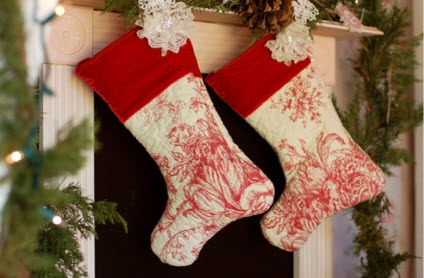
 Nikki of Tikkido shares a shortcut for making a quilted Christmas stocking. Short on time, visit her post to get the know-how.
Image credit: Tikkido
Patterns, patchworks and projects
Nikki of Tikkido shares a shortcut for making a quilted Christmas stocking. Short on time, visit her post to get the know-how.
Image credit: Tikkido
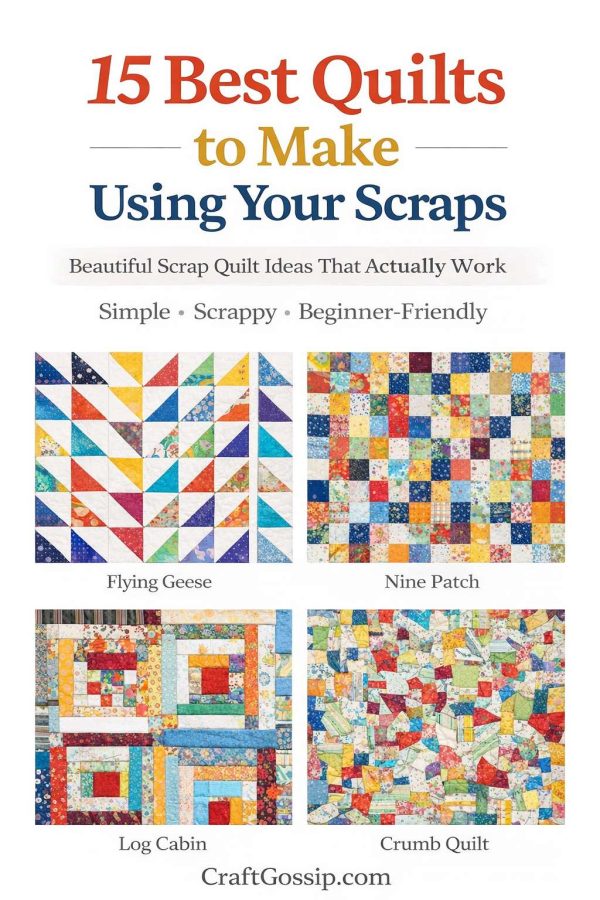
If you’ve ever stood in your sewing room staring at a basket of fabric scraps thinking, “I should do something with these,” this article is for you.
Scrap quilts aren’t just practical — they’re often the most joyful quilts we make. They’re forgiving, colorful, and deeply personal. Every leftover piece carries a memory from a past project.
If you’re searching for the best quilts to make using your scraps, this guide goes beyond inspiration. We’ll talk about which patterns truly work for scraps, how to keep them looking cohesive, how much fabric you actually need, and which scrap sizes suit which designs.
Let’s turn that scrap pile into something intentional.
Scrap quilts continue to trend because they:
Unlike tightly planned quilts, scrap quilts allow flexibility. Slight variations in tone, scale, and print aren’t flaws — they’re part of the charm.
And for many of us, they’re emotionally satisfying. That tiny floral from a baby quilt? It shows up again in a new design.
Not every quilt pattern works well with mixed fabrics.
The best scrap quilt patterns share these traits:
The structure holds the design together while the scraps bring personality.
If a pattern depends on exact color placement or large uninterrupted shapes, it’s usually not ideal for scraps.
This is the ultimate scrap quilt.
Half square triangles (HSTs) use small squares and create endless layout possibilities.
Why it works beautifully for scraps:
You can create:
If you’re unsure what to do with your scraps, start here.
If your scraps are small and irregular, crumb quilting is magic.
Instead of cutting into precise shapes, you sew scraps together randomly into larger “slabs,” then trim into blocks.
Why crumb quilts shine:
Crumb quilts look chaotic mid-process — but once assembled, they’re surprisingly cohesive.
String quilts use narrow strips sewn onto a foundation.
Perfect for:
You can sew strips diagonally, vertically, or randomly. When blocks are squared up, the quilt looks deliberate.
String quilts are fantastic for beginners because seam accuracy is less stressful.
A true classic.
Log cabin blocks use strips built around a center square.
Why it works for scraps:
Keep your center squares consistent for visual balance.
Simple.
Reliable.
Endlessly adaptable.
Nine patch blocks use small squares — perfect for 2½” or 3½” scrap cuts.
Why it works:
Alternate with solid blocks or add sashing for structure.
If you have medium-sized scraps, flying geese blocks are ideal.
Scrappy geese with a consistent background fabric prevent visual overload.
They create strong directional movement across a quilt top.
This block balances structure with randomness.
Scrappy chain units combined with solid blocks create breathing space.
It’s a beautiful option if you want scrap charm without chaos.
Sometimes the simplest layouts are the most powerful.
Equal-sized squares in alternating placement create a bold grid.
This design works best when you pay attention to light vs dark balance.
Scrappy star points paired with solid backgrounds create stunning contrast.
You can keep star centers consistent for cohesion.
It feels classic but works beautifully in modern color palettes.
Strip-based and fast to assemble.
Rotate blocks to create zigzags or woven effects.
This quilt is ideal for 2½” strip scraps.
If you love tiny pieces, this is your project.
Small squares sewn into a dense grid create a pixelated effect.
Time-consuming — but breathtaking.
Made entirely from half square triangles.
It creates a shattered-glass pattern that looks far more complex than it is.
High-contrast scraps work best here.
For confident quilters.
This design uses small strips in layered rotation around a center.
It’s intricate and dramatic — perfect for organized scrap bins.
Use scrap blocks surrounded by solid white or low-volume background.
The empty space allows the scrap sections to shine without overwhelming the eye.
Combine multiple scrap-friendly blocks into one quilt.
It keeps things interesting and prevents fabric fatigue.
Perfect if you enjoy variety.
This is where many scrap quilts struggle.
Here’s how to maintain cohesion:
Even the wildest scrap quilt benefits from repetition.
Instead of dumping everything into one pile, try sorting by:
This makes choosing patterns easier.
If your scraps are mostly small:
Choose crumb, nine patch, or postage stamp.
If mostly strips:
Choose string, log cabin, rail fence.
If medium cuts:
Flying geese or HSTs are ideal.
One common question is:
“How many scraps do I need for a quilt?”
Here’s a rough estimate for a throw-size scrap quilt (60″ x 72″):
Because scraps vary in size, it’s better to measure by total coverage rather than count.
The secret to beautiful scrap quilts isn’t matching fabrics — it’s controlling value.
Value contrast (light vs dark) matters more than print style.
If everything is medium tone, the quilt will look flat.
Make sure you have:
Squint at your layout. If shapes disappear, you need stronger contrast.
Scrap quilts aren’t just practical.
They’re memory quilts without trying to be.
That floral from your daughter’s skirt.
That neutral from a farmhouse pillow.
That bold print from a modern quilt you tried.
They all come together in one place.
That’s why scrap quilts feel layered with story.
The best scrap quilt isn’t the fanciest one.
It’s the one that uses what you already have.
Start simple.
Focus on contrast.
Trim carefully.
Trust the repetition.
Your scrap pile isn’t clutter.
It’s potential.