 Linn of the Home Project wants quilters to broaden their horizons for quilt making like she did with the quilt shown here. It’s not made with 100% cotton fabric, as is the usual case. Visit her blog to learn more.
Image credit: Home Project
Patterns, patchworks and projects
Linn of the Home Project wants quilters to broaden their horizons for quilt making like she did with the quilt shown here. It’s not made with 100% cotton fabric, as is the usual case. Visit her blog to learn more.
Image credit: Home Project
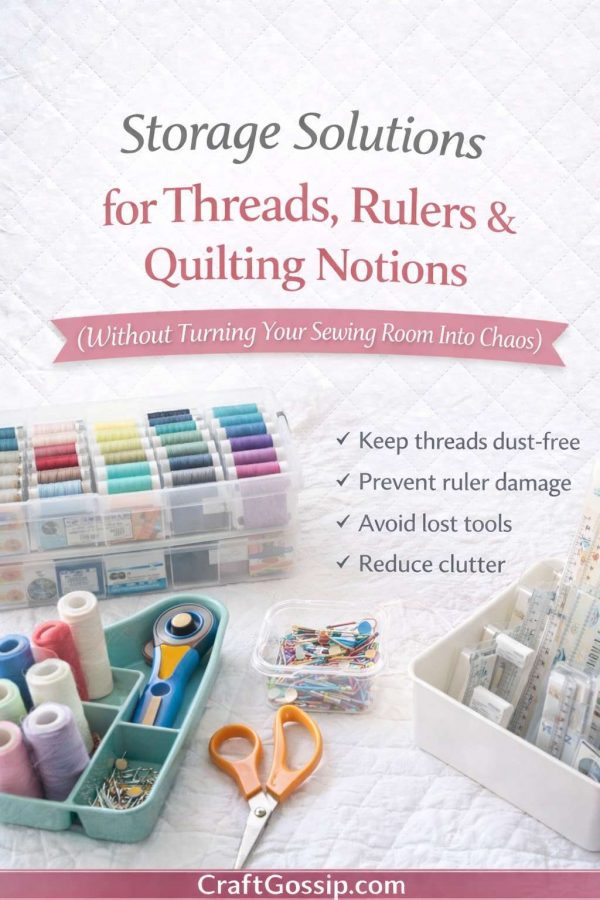
If you’ve ever spent ten minutes looking for your seam ripper… only to find three of them later in the same drawer…
You are officially a quilter.
Notions multiply. Threads roll. Rulers slide behind furniture. And suddenly your “creative space” feels more like a scavenger hunt.
The good news? Organising quilting notions doesn’t require a studio makeover. It just requires a few smart systems.
Let’s talk practical storage — the kind that works for hobby quilters in real homes.
Organisation isn’t about perfection.
It’s about:
Bent rulers, dusty thread, dull rotary blades — these are often storage issues, not product failures.
A little structure keeps your tools working better for longer.
Thread doesn’t love:
Over time, exposure can weaken fibres and fade colours.
Best thread storage options:
Clear plastic thread boxes
Stackable containers
Drawer inserts
Wall racks (away from windows)
If you have a growing thread collection, separating neutrals from colours can make project prep faster.
Specialty quilting retailers like Fat Quarter Shop offer thread storage containers designed specifically to hold standard spool sizes, which prevents tipping and tangling.
Quilting rulers are acrylic — and acrylic scratches and chips.
Avoid:
Better options:
Vertical ruler racks
Wall-mounted holders
Magazine-style file organisers
Dedicated shelf slots
Keeping rulers upright prevents edge damage and keeps grid lines visible and readable.
Blades should always be stored:
Loose rotary cutters in drawers can dull quickly and become dangerous.
Consider:
Tool caddies
Magnetic strips
Dedicated sewing trays
Replace blades regularly and store extras in labelled containers.
Pins. Clips. Seam rippers. Needle packs. Chalk.
These tiny tools disappear easily.
Solutions that actually work:
Clear divided containers
Craft tackle boxes
Small labelled bins
Magnetic dishes for pins
If you constantly rebuy small tools, it’s usually a visibility problem — not a usage problem.
Batting compresses if stored tightly.
Avoid vacuum sealing unless long-term storage is necessary.
Better options:
Rolled storage
Breathable bins
Shelf stacking (not crushed)
Store away from moisture to prevent fibre damage.
If your sewing space doubles as a dining table or spare room, portability matters.
Rolling carts
Stackable bins
Handled totes
Foldaway caddies
These allow you to set up and pack down without chaos.
You don’t need a dedicated sewing room to feel organised.
Clear labelling:
Simple adhesive labels or printed tags work beautifully.
Organisation isn’t just aesthetic.
It:
A tidy system often leads to smoother quilting sessions.
You don’t need custom cabinetry.
Start with:
Build slowly. Upgrade as your collection grows.
Quilting should feel calming — not cluttered.
This article is part of our Ultimate Guide to Quilting Notions for Hobby Quilters, where we focus on tools that improve your quilting experience without overwhelming you.
Next in the series:
Lighting for Quilters: Reduce Eye Strain & Improve Accuracy